What is Segmentation in Marketing: The Foundation of Smart Positioning (STP Model Explained)
Who Created the STP Model?
The STP framework was formalized by Philip Kotler, often referred to as the father of modern marketing.
It was later refined and popularized through strategic consulting frameworks used by firms like McKinsey & Company and other top global strategy institutions.
Despite AI, automation, and digital evolution, STP is still relevant because human psychology hasn’t changed. Only the channels have.
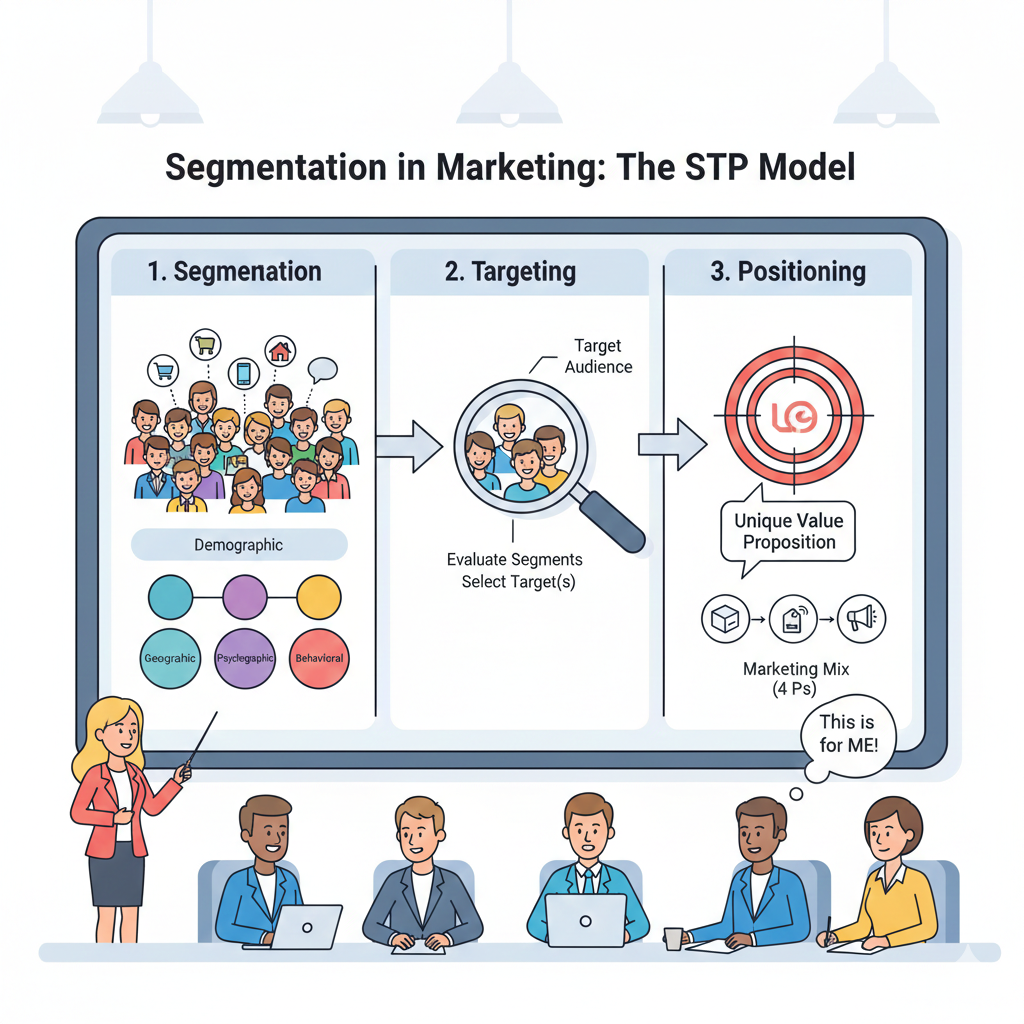
What Is the STP Model?
STP stands for:
1️⃣ Segmentation – Dividing the market into meaningful groups 2️⃣ Targeting – Selecting the most attractive segment 3️⃣ Positioning – Crafting the right brand message for that segment
It is the backbone of:
- Awareness campaigns
- Consideration strategy
- Brand loyalty building
- Repeat purchase growth
- Premium pricing strategy
Step 1: Segmentation – Understanding the Market Deeply
Segmentation answers:
“Who exactly is my customer?”
Without segmentation, marketing becomes guessing.
Types of Segmentation
1️⃣ Demographic Segmentation
- Age (Gen Z, Millennials, Gen X, Boomers)
- Income
- Gender
- Education
- Occupation
2️⃣ Geographic Segmentation
- Metro vs Tier 2/3 cities
- Climate-based behavior
- Regional consumption differences
- Urban vs rural mindset
3️⃣ Psychographic Segmentation
- Lifestyle
- Values
- Aspirations
- Risk appetite
- Innovation acceptance
This is where psychology matters.
Example:
- Gen Z: Experience-driven
- Millennials: Value-driven
- B2B buyers: ROI-driven
4️⃣ Behavioral Segmentation
- Usage frequency
- Brand loyalty level
- Switching behavior
- Price sensitivity
- Benefit sought
This is often the most powerful layer.
Why Segmentation Is Highly Important
Because:
✔️ It reduces marketing waste ✔️ It improves CAC efficiency ✔️ It increases conversion rates ✔️ It strengthens brand recall ✔️ It drives repeat purchases
A mass campaign = High cost, low precision A segmented campaign = Controlled cost, high relevance
Step 2: Targeting – Choosing Where to Win
After segmentation, brands must decide:
- Which segment is most profitable?
- Which segment aligns with our capability?
- Which segment has growth potential?
- Which segment is underserved?
Targeting can be:
- Undifferentiated (mass market)
- Differentiated (multiple segments)
- Niche (focused segment)
- Micro-targeted (AI-driven hyper segmentation)
Step 3: Positioning – Crafting the Perception
Positioning answers:
“Why should this segment choose us?”
Once segmentation is clear, positioning becomes sharper.
Examples:
- Premium positioning → Quality-conscious millennials
- Innovation positioning → Trend-seeking Gen Z
- Cost-efficiency positioning → SME B2B buyers
- Trust-based positioning → Healthcare brands
Positioning affects:
- Advertising communication
- Packaging
- Pricing
- Distribution
- Digital strategy
- Influencer selection
How Consumer Psychology Shapes Segmentation
Consumer behavior depends on:
- Social surroundings
- Economic environment
- Cultural influences
- Technology adoption
- Peer behavior
- Risk perception
- Lifestyle aspirations
AI tools help analyze patterns — but segmentation requires human insight and interpretation.
Step-by-Step: How Segmentation Is Actually Done
Here is the real structured process used by research experts:
Step 1: Define Business Objective
- New product launch?
- Sales decline?
- Premium repositioning?
- Category expansion?
Step 2: Conduct Market Research
Tools Used:
- Usage & Attitude Studies (U&A)
- Focus Group Discussions
- In-depth Interviews
- Quantitative Surveys
- Ethnographic Studies
- Retail Audits
- Social Listening
- Cluster Analysis
Step 3: Data Clustering & Profiling
Advanced tools:
- AI segmentation modeling
- RFM analysis (Recency, Frequency, Monetary)
- Factor analysis
- Latent class modeling
- Behavioral segmentation algorithms
Output: Clear consumer clusters.
Step 4: Segment Evaluation
Each segment is evaluated on:
- Size
- Profitability
- Accessibility
- Growth potential
- Competitive intensity
Step 5: Target Selection
Shortlist segments based on:
- Brand capability
- Investment feasibility
- Long-term sustainability
Step 6: Positioning Development
Develop:
- Value proposition
- Communication tone
- Creative messaging
- Pricing strategy
- Distribution focus
Visual Framework (STP Flow)
Segmentation ↓ Targeting ↓ Positioning ↓ Communication Strategy ↓ Execution ↓ Measurement
Where Segmentation Impacts the Marketing Funnel
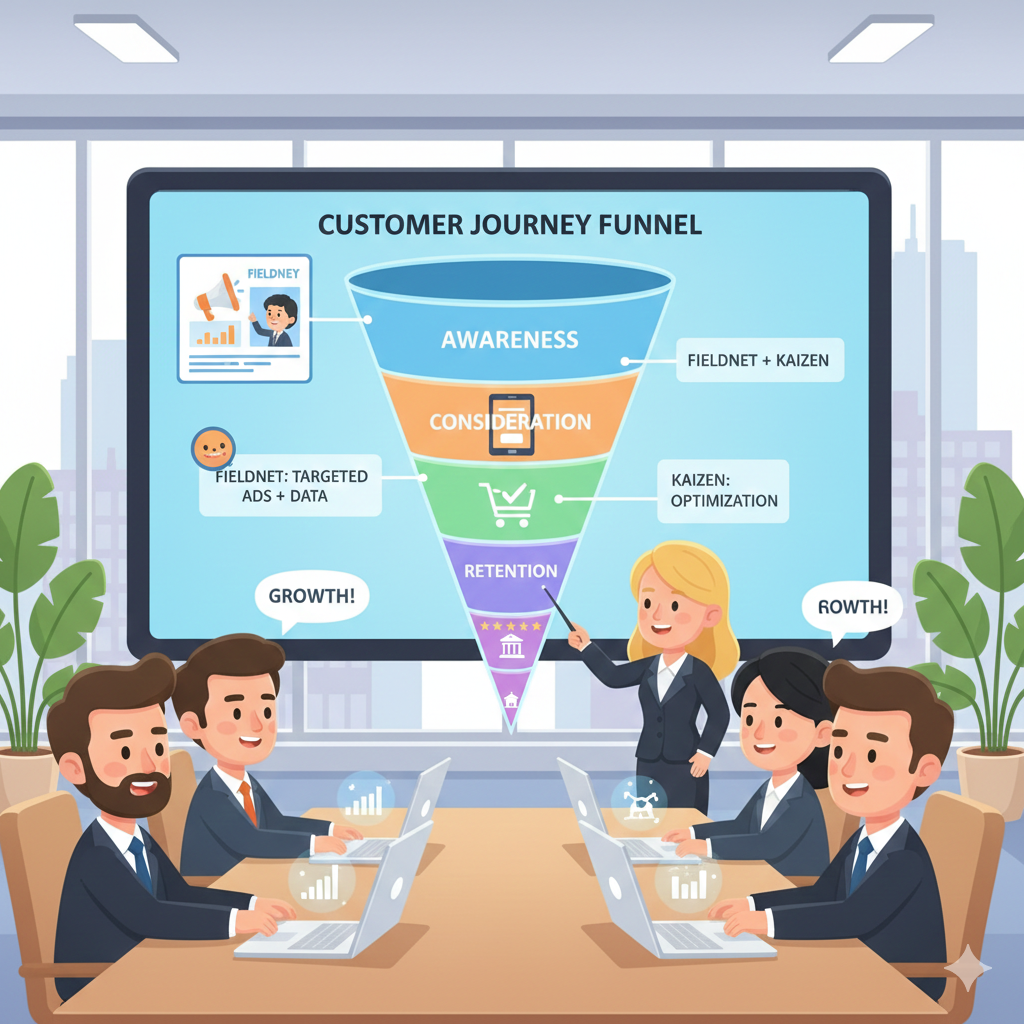
Funnel Stage
Role of Segmentation
Awareness
Right audience selection
Consideration
Tailored messaging
Conversion
Targeted offers
Loyalty
Personalized retention
Repeat
- Behavior-driven engagement
1️⃣ Objective-to-Output Research Framework
From:
- Defining the research objective
- Designing questionnaire & methodology
- Recruiting the right respondent base
- Conducting primary research
- Advanced analytics
- Delivering an actionable brand positioning strategy
2️⃣ Multi-Layer Segmentation Studies
FIELDNET conducts:
- Demographic segmentation
- Behavioral mapping
- Psychographic profiling
- B2B firmographic segmentation
- Healthcare professional clustering
- Retailer & channel segmentation
3️⃣ Advanced Tools Used
- AI-assisted data clustering
- Panel recruitment precision
- Ethnographic immersion
- Purchase journey mapping
- Competitive positioning mapping
- Brand perception tracking
4️⃣ From Research to Communication
FIELDNET bridges the gap between:
Research Output → Brand Strategy → Advertising Communication → Execution
So that:
- Messaging becomes sharper
- Media spend becomes efficient
- Positioning becomes sustainable
- CAC reduces
- ROI improves
Why Segmentation Is Critical in 2026
In today’s world:
- Attention span is low
- Competition is high
- AI has democratized advertising
- Consumers are overloaded
Only brands that understand their micro-segments will survive.
Segmentation is not just marketing science — It is strategic clarity.
Final Thought
If your brand is:
- Launching a new product
- Entering a new geography
- Facing declining sales
- Struggling with positioning
- Spending heavily on ads without conversion
Then segmentation is the first diagnostic tool you need.
Call to Action
Whether you are:
- A B2C consumer brand
- A D2C startup
- A Healthcare company
- A Fintech platform
- A B2B enterprise
FIELDNET helps you:
✔️ Define research objectives ✔️ Categorize your market properly ✔️ Identify the right target segment ✔️ Develop positioning clarity ✔️ Translate insights into a communication strategy
From objective to output — FIELDNET ensures your segmentation drives measurable brand growth.
Because in modern marketing, Clarity wins. Precision scales.
Share this post: